



A revolution in the construction sector
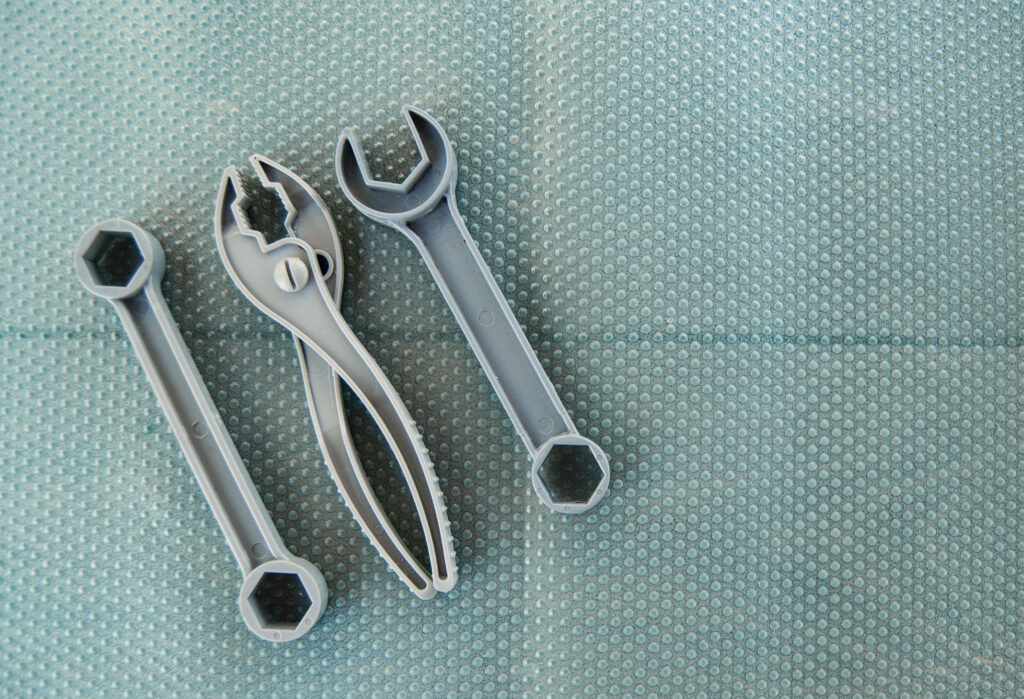
Construction is a constantly evolving sector, where technological innovation and the search for more efficient materials play a central role. Among these materials, plastics have established themselves as an essential element, particularly in the design of tools and equipment.
Thanks to its unique properties, plastic offers a combination of lightness, durability and versatility, making it indispensable in modern tooling.
The advantages of plastics in tooling
- Lightweight and ergonomic
- Plastics make it possible to design tools that are lighter than their metal equivalents, thus reducing user fatigue on worksites.
- For example, handles made of polypropylene (PP) or thermoplastic elastomers (TPE) offer a comfortable grip while limiting the overall weight of the tool and improving grip.
- Wear and impact resistance
- Plastic materials such as polycarbonate (PC) or polyamide (PA) are designed to withstand impacts and harsh conditions, guaranteeing a long service life.
- This is particularly useful for hand tools such as plastic mallets, which reduce the risk of sparks on sensitive industrial sites.
- Corrosion protection
- Unlike metals, plastics do not rust. This property is essential for tools used outdoors or exposed to damp environments.
- Customization and modularity
- Plastics allow great flexibility in the design of tools and their storage boxes, facilitating the integration of innovative features such as integrated storage compartments or adjustable clips.
Concrete applications of plastics in building tools
- Power tools
- Housings in polycarbonate (PC) or ABS (acrylonitrile butadiene styrene) protect electronic components while remaining impact-resistant.
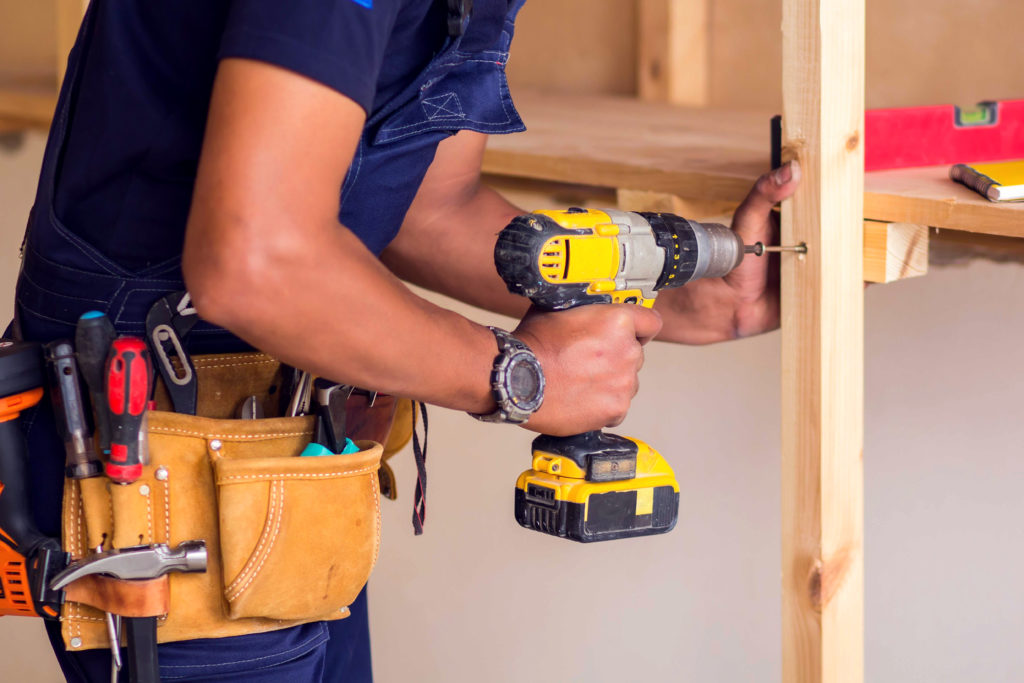
- Drills, saws and sanders also benefit from lightweight, sturdy plastic shells for easy handling.
- Manual tools
- Spirit levels often incorporate PMMA (polymethyl methacrylate) components for their transparency and scratch resistance.
- Measuring tools, such as tape measures or squares, use plastics for their durability, precision and resistance to possible falls.
- Personal protective equipment (PPE)
- Construction helmets, gloves and safety goggles use polymers such as polycarbonate (PC), acrylonitrile butadiene styrene (ABS) or high-density polyethylene (HDPE) to guarantee optimum protection while remaining comfortable.
- Special accessories
- Reinforced plastic storage boxes, made from polypropylene (PP), are designed to withstand impact and extreme temperatures, while being easy and lightweight to transport.
A response to environmental challenges
As the building industry adopts more sustainable practices, the role of recycled or biosourced plastics is becoming increasingly important.
- Recyclability Some polymers, such as rPET or recycled PP, are used in the manufacture of tools and accessories, reducing their environmental impact.
- Biosourced solutions Innovations such as those proposed by AMP-POLYMIX GROUP make it possible to integrate plastics from renewable resources into site equipment.
Plastics are revolutionizing the construction tool sector, offering lightweight, robust and durable solutions. Thanks to adapted materials, such as those developed by AMP-POLYMIX Group, professionals can benefit from higher-performance tools that meet environmental challenges.





Leave a Reply